High-Accuracy De Novo Rabbit Antibody Sequencing Services
Background Platform Workflow Application Advantage Related Services FAQ Online Inquiry
At Creative Biolabs, we harness the unparalleled advantages of the rabbit immune system by providing a definitive De Novo Rabbit Antibody Sequencing Service. Rabbits are a premier source for generating high-affinity, high-specificity monoclonal and polyclonal antibodies, often recognizing epitopes that are non-immunogenic in rodents. Our state-of-the-art De Novo Antibody Sequencing platform provides a complete, high-accuracy solution to retrieve the full-length variable (V) and constant (C) region sequences of any rabbit antibody—directly from the protein. By integrating advanced mass spectrometry with a proprietary AI-driven bioinformatics pipeline, we deliver 100% accurate sequences, enabling the recombinant production, engineering, and long-term security of your most critical research tools.
Discuss Your Project Today
Why is Rabbit Antibody Sequencing a Unique Challenge?
The rabbit antibody repertoire presents distinct advantages and significant technical hurdles compared to mouse or human antibodies. Standard sequencing approaches often fail due to the rabbit's unique immunoglobulin (Ig) genetics and biochemistry. Understanding these challenges is the first step to overcoming them.
-
Complex Rabbit IgG Structure: Unlike the single disulfide bond linking heavy and light chains in murine IgG1, rabbit IgG has an additional disulfide bond in the hinge region. Furthermore, rabbit IgG lacks a typical glycosylation site at Asn297 in the CH2 domain, impacting its effector functions and structural analysis.
-
Kappa Light Chain Allotypes: Rabbits primarily use the kappa (κ) light chain, which exists in four major allotypes (K1, K2, b4, b5, etc.). The K1 allotype, in particular, features an extra disulfide bond connecting the Vκ and Cκ domains. This structural complexity, along with C-terminal variations, can confound standard sequencing and assembly.
-
Atypical Cysteine Residues: The rabbit immune system frequently utilizes non-canonical cysteine residues within the variable domains to form additional inter-domain disulfide bonds. These are crucial for the antibody's structure and function but are notoriously difficult to map correctly without a specialized platform.
-
Polyclonal Complexity: A significant portion of valuable rabbit antibody reagents are polyclonal (pAb). These samples contain a complex mixture of thousands of different antibody sequences. Sequencing a pAb requires not only identifying the dominant sequences but also quantifying the relative abundance of different variants and isoforms, a task impossible for traditional methods.
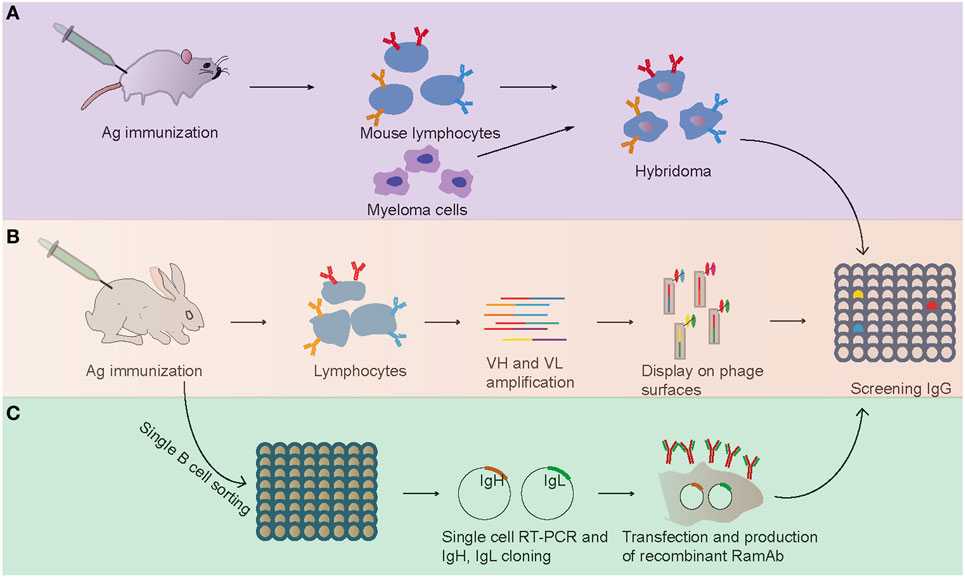 Fig. 1 Flowchart summarizing the generation of antigen-specific monoclonal antibodies.1
Our Technology: The De Novo Rabbit Antibody Sequencing Platform
We have moved beyond the limitations of Edman degradation and conventional MS. Our platform combines cutting-edge, ultra-high-resolution mass spectrometry with a purpose-built bioinformatics suite to guarantee 100% accuracy.
Core Technology: Next-Generation Mass Spectrometry
We utilize state-of-the-art LC-MS/MS systems. This technology provides:
-
Exceptional Mass Accuracy: Sub-ppm mass accuracy allows for the unambiguous determination of peptide compositions.
-
High Resolution: Resolves complex isotopic patterns and overlapping peptide signals, critical for heterogeneous pAb samples.
-
Superior Sensitivity: Enables us to work with minimal sample amounts (as low as 10-20 µg of purified antibody).
-
Deep Coverage: Advanced fragmentation techniques (CID, HCD, ETD) ensure all parts of the protein are fragmented and sequenced.
Bioinformatics: The Rabbit Antibody AI Assembler
The "magic" of de novo antibody sequencing lies in the data analysis. Our proprietary Rabbit Antibody AI Assembler software is the engine behind our service.
-
AI-Driven Spectral Interpretation: Trained on millions of rabbit antibody spectra, our algorithm provides superior de novo peptide-level sequencing.
-
Intelligent Overlap Assembly: The software intelligently stitches overlapping peptides from multiple enzyme digests to construct full-length heavy and light chain contigs.
-
Allotype Deconvolution: Automatically identifies rabbit-specific allotypes (K1, K2) and correctly assembles the unique C-terminal sequences.
-
I/L Differentiation: We definitively distinguish between Isoleucine (I) and Leucine (L) residues, a common failure point for other platforms, by using specific enzymatic fragmentation patterns and retention time analysis.
-
PTM and Disulfide Mapping: The platform simultaneously identifies all post-translational modifications (PTMs) and maps all disulfide bridges, including the atypical V-domain cysteines unique to rabbits.
Our Proven Workflow for De Novo Rabbit Antibody Sequencing
Our process is rigorous, transparent, and optimized for 100% coverage and accuracy.
Step 1: Sample QC and Preparation
-
The client's antibody sample is first verified for purity and concentration. This ensures optimal starting material.
Step 2: Chain Separation and Multi-Enzyme Digestion
-
The heavy chain (HC) and light chain (LC) are separated under reducing conditions.
-
Each chain is then digested in parallel by a panel of 5-6 different, orthogonal enzymes. This multi-enzyme strategy is the key to achieving 100% coverage.
Step 3: High-Resolution LC-MS/MS Analysis
-
Each enzyme digest is analyzed individually on our high-resolution mass spectrometers. We collect millions of high-quality MS/MS spectra for each chain.
Step 4: AI-Powered Sequence Assembly
-
The massive spectral data is fed into the AI Assembler.
-
The software performs de novo sequencing on each peptide spectrum and assembles the results into full-length contigs by aligning the overlapping peptides from the different enzyme digests.
Step 5: N- and C-Terminal Validation
-
We confirm the exact N-terminal and C-terminal sequences, which are often "ragged" in hybridomas, using specialized protocols to ensure the final sequence is 100% correct from start to finish.
Step 6: Comprehensive Report Generation
-
A dedicated Ph.D.-level scientist manually verifies the full sequence assembly. The final report includes the complete, annotated sequences, all peptide coverage maps, and PTM analysis.
Applications: Unlock the Full Potential of Your Rabbit Antibody
A definitive sequence transforms your antibody from a finite reagent into a permanent, engineerable asset.
-
Antibody Recombinant Production: The most common application. Once sequenced, your rabbit antibody can be produced recombinantly in mammalian (CHO, HEK293) or bacterial systems, ensuring an infinite, highly consistent supply.
-
Hybridoma Rescue: Secure your valuable hybridoma cell lines. If a line becomes contaminated, dies, or exhibits genetic drift, the sequence provides a permanent digital backup.
-
Intellectual Property (IP) and Patent Filing: A complete and accurate antibody sequence is a non-negotiable requirement for patent applications and protecting your intellectual property.
-
Antibody Engineering and Humanization: The sequence is the starting point for all engineering. Use it for humanization, affinity maturation, and bispecific/multispecific antibody construction.
-
Troubleshooting and Characterization: Understand batch-to-batch variability, identify PTMs that affect function, and confirm the identity of commercial antibodies.
The Creative Biolabs Advantage: Why Choose Us?
With over 20 years of experience in antibody discovery and engineering, Creative Biolabs is your expert partner for De Novo Antibody Sequencing.
-
Unmatched Rabbit Expertise: We are not general proteomics providers. We are antibody engineers who understand the unique biology of the rabbit antibody.
-
Guaranteed Accuracy: We stand by our results. Our multi-enzyme, multi-algorithm approach delivers 100% accuracy, every time.
-
Full Sequence, No Gaps: We provide the entire sequence, including the full variable and constant regions. No missing residues, no ambiguities.
-
Speed and Reliability: Our streamlined workflow, powered by AI, delivers definitive results in as little as 10 business days.
-
Data Security: We treat your project with the strictest confidentiality. Your sequence data is secure with us.
Explore Our Comprehensive Services
To further support your research, Creative Biolabs offers a suite of antibody sequencing related services:
Don't risk losing your most valuable reagents. Secure their future, unlock their potential, and ensure their reproducibility. The expert team at Creative Biolabs is ready to translate your protein into a permanent, high-fidelity digital sequence.
Contact Us Today for a Free Quote!
Frequently Asked Questions (FAQs)
Q: How can you guarantee 100% accuracy and differentiate Isoleucine (I) from Leucine (L)?
A: Our 100% accuracy guarantee is built on our "multiple-enzyme, high-redundancy" strategy. We digest the antibody with a panel of 5-6 different enzymes (Trypsin, Chymotrypsin, Glu-C, etc.) and sequence the peptides from each digest. Our AI Assembler then cross-validates these overlapping peptides, creating a final sequence with extremely high confidence and zero gaps.
The Isoleucine (I) and Leucine (L) differentiation, a classic problem in mass spectrometry as they have identical mass, is solved by our platform. We use specific fragmentation techniques (like ETD) and analyze characteristic fragment ions (w-ions) and a-ions, combined with predictive chromatographic retention time analysis, to unambiguously distinguish between these two residues.
Q: Why should I use de novo protein sequencing instead of sequencing the DNA/RNA from the hybridoma?
A: This is a critical question. De Novo Antibody Sequencing from the protein is the gold standard for several reasons:
-
It sequences the functional, expressed protein: This is the most accurate representation of your antibody. Hybridoma cell lines can contain multiple non-productive or aberrant heavy and light chain transcripts. DNA/RNA sequencing can't tell you which HC and LC pair correctly to form the final, functional antibody.
-
No Cell Line Needed: If your hybridoma is lost, contaminated, or you only have the purified protein, de novo protein sequencing is your only option.
-
Identifies PTMs: DNA/RNA sequencing cannot detect post-translational modifications (PTMs) like glycosylation, oxidation, or N-terminal pyro-glutamation. Our MS-based platform identifies and maps these PTMs, which can be critical for antibody function and manufacturability.
-
100% V- and C-region Confirmation: We sequence the entire protein, confirming both the variable regions and the exact constant region allotype (e.g., K1 light chain), including any C-terminal "raggedness."
Q: How pure does my rabbit antibody sample need to be? What about contaminants like BSA?
A: A purity of >90% is ideal. The main issue with contaminants is that they can suppress the antibody signal in the mass spectrometer. Carrier proteins like Bovine Serum Albumin (BSA) or gelatin are common contaminants that can interfere with sequencing. However, if your sample contains these, please inform our team. We have robust, in-house protocols to remove BSA and other common contaminants before sequencing, ensuring your project's success.
Q: What makes Creative Biolabs' platform superior for rabbit antibody sequencing?
A: Our expertise. Unlike general proteomics labs, we are antibody engineers who specialize in the unique complexities of the rabbit antibody. Our Sequencing Platform and AI-driven software are specifically designed to handle:
-
Rabbit-specific kappa light chain allotypes (K1, K2).
-
Atypical disulfide bonds found in rabbit V-domains.
-
The complex C-terminal heterogeneity.
-
The high sequence diversity of rabbit CDR3 loops.
We combine this specialized expertise with guaranteed 100% accuracy and coverage, providing a definitive sequence you can trust for patent filing, humanization, and recombinant production.
Reference
-
Zhang, Zaibao, et al. "Advances in the isolation of specific monoclonal rabbit antibodies." Frontiers in immunology 8 (2017): 494. Distributed under Open Access license CC BY 4.0, without modification. https://doi.org/10.3389/fimmu.2017.00494









